







Product Details
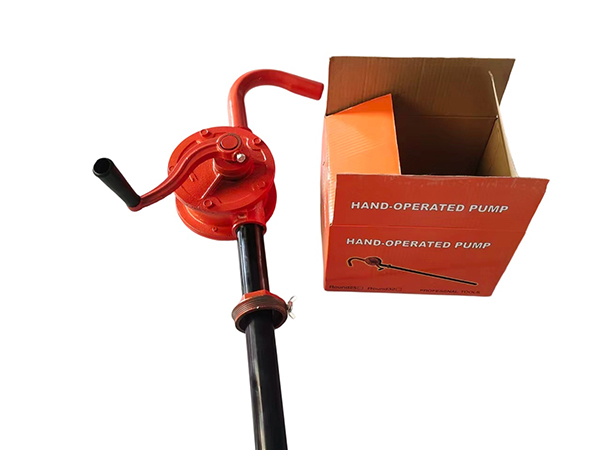
Rotary Oil Pump
Rotary Oil Pump
Product Overview
A Rotary Oil Pump is a fluid transfer device that uses a rotating mechanism to move oil, fuel, lubricants, and other compatible liquids. Through continuous rotary movement, the pump creates pressure differences inside the pump chamber, allowing efficient and stable fluid transfer.
The rotary oil pump is available in different operating configurations, including hand crank operation and mechanical drive systems, making it suitable for various application requirements. Its compact structure, reliable performance, and simple operating principle make it widely used in machinery maintenance, automotive servicing, industrial lubrication, agricultural equipment, and fluid handling applications.
With smooth rotary pumping action and durable construction, the rotary oil pump provides an effective solution for transferring oils and lubricating fluids.
Product Features
Smooth Rotary Pumping Operation
The Rotary Oil Pump uses a rotating pumping mechanism to generate continuous fluid flow. The rotary design provides smooth operation and stable oil delivery during the transfer process.
Efficient Fluid Transfer Performance
The internal rotary components create consistent pressure inside the pump chamber, allowing efficient transfer of oil, fuel, lubricants, and other compatible fluids.
Simple and Reliable Structure
The pump consists of a pump body, rotating mechanism, drive components, sealing system, inlet port, and outlet port. The simple structure supports reliable operation and convenient maintenance.
Flexible Drive Options
Rotary oil pumps can be operated manually through a hand crank or connected to mechanical drive systems according to different application requirements.
Durable Material Design
The pump can be manufactured with different material options, including cast iron, aluminum alloy, and stainless steel, providing adaptability for different fluids and working environments.
Working Principle
The Rotary Oil Pump operates through a rotating displacement mechanism. When the rotor or gear components rotate, they create changing pressure areas inside the pump chamber.
The low-pressure area draws fluid through the inlet port, while the rotating mechanism transfers the fluid toward the outlet port under increased pressure. This continuous rotary movement produces a stable fluid transfer process.
Applications
Industrial Lubrication
Rotary oil pumps are commonly used for supplying lubricating oil to machinery, engines, and industrial equipment during maintenance and operation.
Automotive Service
The pump is suitable for garages and repair facilities for transferring engine oil, fuel, and other vehicle maintenance fluids.
Machinery Maintenance
Rotary oil pumps provide an efficient solution for oil supply and lubrication tasks involving mechanical equipment and production systems.
Agricultural Equipment
The pump can be used for fluid transfer and maintenance of tractors, agricultural machinery, and outdoor equipment.
Product Advantages
Smooth rotary pumping performance
Stable oil transfer capability
Simple mechanical structure
Easy operation and maintenance
Suitable for multiple fluid applications
Durable construction options
Flexible manual or mechanical drive
Reliable long-term performance
Technical Characteristics
The Rotary Oil Pump consists of a pump body, rotary pumping unit, drive mechanism, sealing components, inlet connection, and outlet connection.
The design focuses on efficient fluid displacement, mechanical reliability, smooth operation, and adaptability to different applications. Specifications can be selected according to flow requirements, fluid characteristics, material selection, connection methods, and operating conditions.
Summary
The Rotary Oil Pump is a reliable fluid transfer solution designed for oil, fuel, and lubricant handling applications. With its efficient rotary mechanism, stable pumping performance, and flexible operating options, it provides an effective solution for industrial maintenance, automotive servicing, machinery lubrication, and general fluid transfer needs.
 Recommended News
-
Copper Castings vs Aluminum Castings: How to Choose Suitable Casting Materials?
2026-07-21 02:18:07
-
What Are the Inherent Limitations of Copper Castings in Industrial Applications?
2026-07-21 02:17:39
-
Are Copper Castings Recyclable and What Is the Scrap Recycling Process?
2026-07-21 02:17:01
-
What Surface Treatment Processes Can Be Used on Copper Castings?
2026-07-21 02:16:36
-
Which Industries Apply Copper Castings and What Are Typical Parts?
2026-07-21 02:16:06
Contact Us
—— Hotline:+86 18920038906
—— Email:ruifeng8906@gmail.com
—— Whatsapp:+8618920038906
—— Address:Liusi, Haocun Town, Botou City, Hebei Province, P.R.China