







Product Details
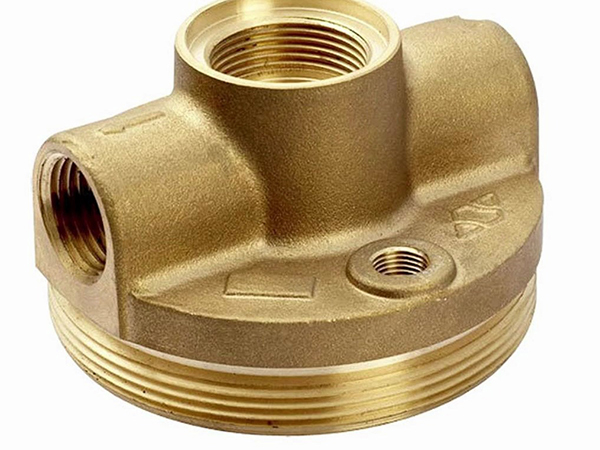
Copper Castings
Copper Castings
Product Overview
Copper Castings are metal components produced by forming molten copper or copper alloys into customized molds through casting processes. Copper materials provide outstanding electrical conductivity, thermal conductivity, corrosion resistance, and wear resistance, making copper castings suitable for applications requiring reliable performance and long service life.
Through different casting technologies, including sand casting, investment casting, gravity casting, and precision casting, copper castings can be manufactured into complex-shaped components with stable mechanical properties and accurate dimensions.
Copper castings are widely used in electrical equipment, power systems, industrial machinery, marine equipment, plumbing systems, and customized engineering applications where excellent conductivity and durability are required.
Product Features
Excellent Electrical Conductivity
Copper castings provide superior electrical conductivity, making them ideal for electrical components, power equipment, connectors, terminals, and conductive parts.
High Thermal Conductivity
Copper alloy materials offer excellent heat transfer capability, supporting applications requiring efficient thermal management and heat dissipation.
Strong Corrosion Resistance
Copper and copper alloys provide good resistance to corrosion, oxidation, and environmental exposure, allowing stable performance in demanding conditions.
Good Mechanical Strength
Copper castings combine strength, durability, and wear resistance, making them suitable for mechanical components exposed to continuous operation and loads.
Complex Shape Manufacturing
Casting processes enable the production of customized copper components with complex structures, integrated designs, and various dimensions.
Manufacturing Process
Material Selection
Suitable copper alloys are selected according to application requirements, including electrical performance, mechanical strength, corrosion resistance, and operating conditions.
Common copper casting materials include:
Copper Alloy
Brass
Bronze
Other Copper-Based Alloys
Mold Design and Development
Customized molds are designed according to product drawings, samples, or 3D models. Proper mold design ensures casting accuracy and structural reliability.
Copper Casting Process
Molten copper alloy is poured into molds and solidified to form the required component shape. Different casting methods can be selected based on product requirements.
Common processes include:
Sand Casting – suitable for larger and complex copper components.
Investment Casting – suitable for precision parts requiring detailed structures.
Gravity Casting – provides stable mechanical properties and reliable quality.
Precision Casting – suitable for components requiring higher accuracy.
Machining and Surface Treatment
Additional processing may include:
CNC Machining
Drilling
Milling
Turning
Polishing
Surface Finishing
These processes improve dimensional accuracy, surface quality, and functional performance.
Quality Inspection
Finished copper castings are inspected for:
Dimensional accuracy
Material properties
Surface quality
Electrical performance
Structural integrity
Applications
Electrical and Power Equipment
Copper castings are widely used in electrical connectors, conductive components, terminals, switchgear parts, and power system components.
Industrial Machinery
Copper alloy castings are applied in machine components, bearings, bushings, valves, and mechanical systems requiring durability and wear resistance.
Marine Equipment
Due to excellent corrosion resistance, copper castings are suitable for marine components, ship equipment, and seawater-related applications.
Plumbing and Fluid Systems
Copper castings are used in valves, fittings, connectors, and fluid control components requiring corrosion resistance and reliability.
Engineering Components
Customized copper castings are applied in various industrial and engineering systems requiring high-performance copper alloy parts.
Product Advantages
Excellent electrical conductivity
High thermal conductivity
Strong corrosion resistance
Good wear resistance
Reliable mechanical strength
Supports complex component designs
Multiple casting process options
Suitable for customized production
Technical Characteristics
Copper Castings can be customized according to:
Copper alloy grade
Component structure and dimensions
Casting process requirements
Electrical performance needs
Mechanical strength requirements
Surface treatment specifications
Application environment
The manufacturing process focuses on material performance, casting quality, dimensional accuracy, and long-term operational reliability.
Summary
Copper Castings provide reliable solutions for manufacturing conductive, durable, and corrosion-resistant copper alloy components. With excellent electrical and thermal properties, flexible casting processes, and customized manufacturing capability, copper castings are widely used in electrical equipment, industrial machinery, marine systems, plumbing applications, and engineering projects.
 Recommended News
-
Copper Castings vs Aluminum Castings: How to Choose Suitable Casting Materials?
2026-07-21 02:18:07
-
What Are the Inherent Limitations of Copper Castings in Industrial Applications?
2026-07-21 02:17:39
-
Are Copper Castings Recyclable and What Is the Scrap Recycling Process?
2026-07-21 02:17:01
-
What Surface Treatment Processes Can Be Used on Copper Castings?
2026-07-21 02:16:36
-
Which Industries Apply Copper Castings and What Are Typical Parts?
2026-07-21 02:16:06
Contact Us
—— Hotline:+86 18920038906
—— Email:ruifeng8906@gmail.com
—— Whatsapp:+8618920038906
—— Address:Liusi, Haocun Town, Botou City, Hebei Province, P.R.China