







Product Details
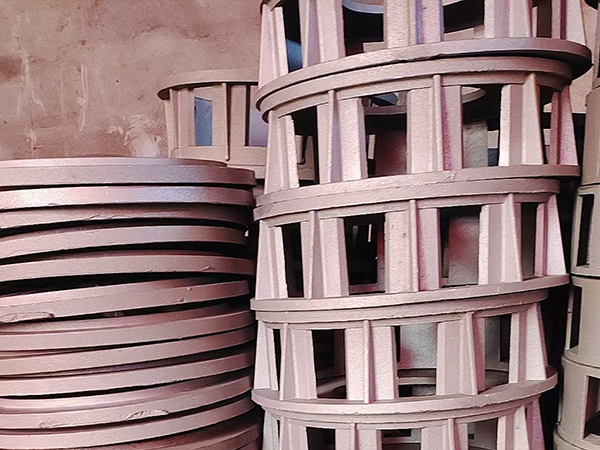
Lightweight Aluminum Parts
Lightweight Aluminum Parts
Product Overview
Lightweight Aluminum Parts are customized components manufactured from aluminum alloys to provide excellent weight reduction, mechanical performance, and corrosion resistance. Aluminum materials offer a high strength-to-weight ratio, making them ideal for applications where reducing component weight while maintaining structural reliability is important.
Through aluminum casting, CNC machining, extrusion, and other manufacturing processes, lightweight aluminum parts can be produced in various shapes, sizes, and structures according to different application requirements.
These components are widely used in automotive systems, industrial machinery, electrical equipment, transportation products, construction applications, and precision engineering systems requiring lightweight and durable solutions.
Product Features
Lightweight Structural Design
Lightweight Aluminum Parts help reduce the overall weight of equipment and products while maintaining sufficient mechanical strength. The low density of aluminum alloy provides excellent weight-saving advantages.
High Strength-to-Weight Ratio
Aluminum alloy materials offer a balance between low weight and high structural performance, making lightweight aluminum components suitable for applications requiring both efficiency and durability.
Excellent Corrosion Resistance
Aluminum naturally forms a protective oxide layer that improves resistance to oxidation and environmental exposure. Additional surface treatments can further enhance corrosion protection.
Flexible Manufacturing Options
Lightweight aluminum parts can be produced through various processes, including:
Aluminum Die Casting
Aluminum Sand Casting
Gravity Casting
CNC Machining
Aluminum Extrusion
Different manufacturing methods can be selected based on component structure, precision requirements, and production volume.
Custom Component Solutions
Lightweight aluminum parts can be customized according to product drawings, samples, 3D models, and technical specifications, supporting different shapes, dimensions, and functional requirements.
Manufacturing Process
Design and Material Selection
The manufacturing process begins with product design analysis and aluminum alloy selection based on strength requirements, weight targets, operating conditions, and application environment.
Forming Process
Depending on the component design, aluminum parts can be manufactured through casting, machining, or extrusion processes to achieve the required structure and performance.
Precision Machining
CNC machining, drilling, tapping, milling, and other processes can be applied to achieve accurate dimensions and assembly requirements.
Surface Treatment
Surface finishing processes such as anodizing, powder coating, polishing, and protective coatings can improve appearance, corrosion resistance, and surface durability.
Quality Inspection
Finished lightweight aluminum parts are inspected for dimensions, surface quality, material performance, and functional requirements to ensure reliable application.
Applications
Automotive Industry
Lightweight aluminum parts are widely used in vehicle housings, brackets, structural components, engine parts, and transportation systems to improve efficiency through weight reduction.
Industrial Equipment
These components are suitable for machinery frames, equipment housings, mechanical parts, and industrial systems requiring lightweight structures.
Electrical and Electronic Equipment
Lightweight aluminum parts are commonly used for enclosures, heat sinks, protective covers, and electronic equipment components.
Aerospace and Transportation
Aluminum components are used in transportation-related applications where weight reduction and structural performance are important.
Construction and Engineering
Lightweight aluminum parts are applied in construction equipment, engineering systems, and customized hardware requiring durable and lightweight materials.
Product Advantages
Lightweight aluminum alloy construction
Excellent strength-to-weight ratio
Good corrosion resistance
Reduced equipment weight
Supports complex structural designs
Multiple manufacturing process options
Suitable for customized production
Durable and reliable performance
Technical Characteristics
Lightweight Aluminum Parts can be customized according to:
Aluminum alloy type
Component structure and dimensions
Weight reduction requirements
Casting or machining process
Surface treatment specifications
Mechanical performance requirements
Application environment
The manufacturing process focuses on lightweight design, structural reliability, dimensional accuracy, and long-term performance.
Summary
Lightweight Aluminum Parts provide an effective solution for applications requiring reduced weight, reliable strength, and durable performance. With advanced aluminum manufacturing processes and flexible customization options, these components are widely used in automotive, industrial equipment, electrical systems, machinery, transportation, and engineering applications.
 Recommended News
-
Copper Castings vs Aluminum Castings: How to Choose Suitable Casting Materials?
2026-07-21 02:18:07
-
What Are the Inherent Limitations of Copper Castings in Industrial Applications?
2026-07-21 02:17:39
-
Are Copper Castings Recyclable and What Is the Scrap Recycling Process?
2026-07-21 02:17:01
-
What Surface Treatment Processes Can Be Used on Copper Castings?
2026-07-21 02:16:36
-
Which Industries Apply Copper Castings and What Are Typical Parts?
2026-07-21 02:16:06
Contact Us
—— Hotline:+86 18920038906
—— Email:ruifeng8906@gmail.com
—— Whatsapp:+8618920038906
—— Address:Liusi, Haocun Town, Botou City, Hebei Province, P.R.China