







Product Details
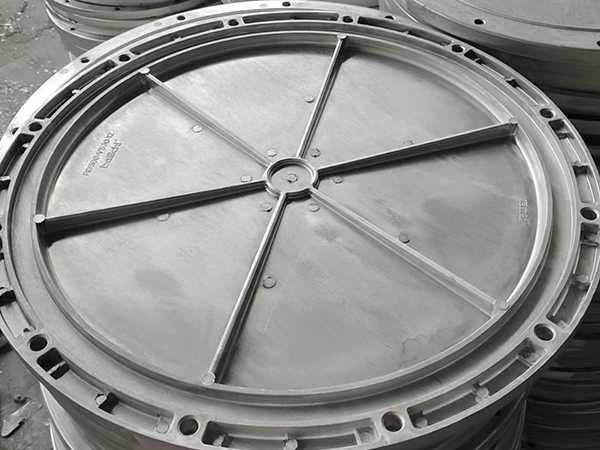
Aluminum Casting Manufacturer
Aluminum Casting
Product Overview
Aluminum Casting is a manufacturing process that forms aluminum alloy components by shaping molten aluminum into customized molds. This process enables the production of complex parts with lightweight characteristics, high dimensional stability, and reliable mechanical performance.
Aluminum castings are widely used because aluminum alloys provide an excellent combination of low weight, strength, corrosion resistance, thermal conductivity, and machinability. According to different product structures and application requirements, various casting methods can be applied, including aluminum die casting, sand casting, gravity casting, and precision casting.
Aluminum casting components are commonly used in automotive parts, industrial equipment, machinery housings, electrical components, construction hardware, and customized engineering applications.
Product Features
Lightweight and High-Strength Aluminum Components
Aluminum casting parts provide excellent strength-to-weight performance, helping reduce overall component weight while maintaining structural reliability and mechanical strength.
Complex Geometry Manufacturing
The casting process allows the production of parts with complex shapes, thin walls, integrated structures, and detailed features, improving design flexibility and reducing assembly requirements.
Excellent Material Performance
Aluminum alloy materials provide good corrosion resistance, thermal conductivity, and dimensional stability, making aluminum castings suitable for various operating environments.
Multiple Casting Technologies
Different aluminum casting processes can be selected based on component requirements:
Aluminum Die Casting
Suitable for high-volume production requiring good dimensional accuracy, efficient manufacturing, and consistent quality.
Aluminum Sand Casting
Suitable for larger components, customized structures, and applications requiring flexible design options.
Aluminum Gravity Casting
Provides reliable mechanical properties and is suitable for medium-volume production.
Precision Aluminum Casting
Used for components requiring detailed structures, improved accuracy, and complex designs.
Additional Processing Options
Aluminum casting components can be further processed through CNC machining, drilling, tapping, polishing, anodizing, powder coating, painting, and other surface treatments to meet different functional and appearance requirements.
Manufacturing Process
Product Design and Engineering Analysis
The aluminum casting process starts with customer drawings, 3D models, samples, or technical specifications. Engineering analysis is performed to optimize product structure, casting method, and material selection.
Mold and Tool Development
Customized molds are designed and manufactured according to product requirements. Proper mold design helps improve dimensional accuracy, casting quality, and production consistency.
Aluminum Alloy Casting
Molten aluminum alloy is formed through the selected casting process. After cooling and solidification, the aluminum component is removed and prepared for subsequent processing.
Machining and Surface Treatment
According to application requirements, aluminum castings can undergo CNC machining, surface finishing, cleaning, coating, and other processes to achieve required specifications.
Quality Inspection
Finished aluminum casting components are inspected for dimensions, appearance, material performance, and functional requirements to ensure product reliability.
Applications
Automotive Industry
Aluminum castings are widely used in automotive housings, brackets, engine components, structural parts, and lightweight vehicle components.
Industrial Equipment
Aluminum casting parts are applied in machinery housings, equipment frames, mechanical components, and industrial systems requiring lightweight and durable materials.
Electrical and Electronic Equipment
Aluminum cast components are commonly used for electrical enclosures, heat dissipation parts, protective housings, and electronic equipment structures.
Construction and Engineering
Aluminum castings are suitable for construction equipment, engineering components, and customized hardware applications.
Product Advantages
Lightweight aluminum alloy structure
High strength-to-weight ratio
Excellent corrosion resistance
Supports complex component designs
Multiple casting process options
Suitable for customized production
Supports CNC machining and surface finishing
Stable performance for industrial applications
Technical Characteristics
Aluminum Casting products can be customized according to different project requirements, including:
Aluminum alloy selection
Casting process type
Component size and structure
Dimensional tolerance requirements
Surface treatment options
Machining requirements
Application environment
The manufacturing process focuses on casting accuracy, material performance, structural strength, and consistent product quality.
Summary
Aluminum Casting is a versatile solution for producing lightweight, durable, and complex aluminum alloy components. Through flexible casting technologies and customized processing options, aluminum castings provide reliable solutions for automotive, industrial equipment, machinery, electrical, construction, and engineering applications.
 Recommended News
-
Copper Castings vs Aluminum Castings: How to Choose Suitable Casting Materials?
2026-07-21 02:18:07
-
What Are the Inherent Limitations of Copper Castings in Industrial Applications?
2026-07-21 02:17:39
-
Are Copper Castings Recyclable and What Is the Scrap Recycling Process?
2026-07-21 02:17:01
-
What Surface Treatment Processes Can Be Used on Copper Castings?
2026-07-21 02:16:36
-
Which Industries Apply Copper Castings and What Are Typical Parts?
2026-07-21 02:16:06
Contact Us
—— Hotline:+86 18920038906
—— Email:ruifeng8906@gmail.com
—— Whatsapp:+8618920038906
—— Address:Liusi, Haocun Town, Botou City, Hebei Province, P.R.China