







NewsDetails
How to Select a Professional Metal Casting Supplier
author:ruifengsirens time:2026-10-09 19:48:46 click:128
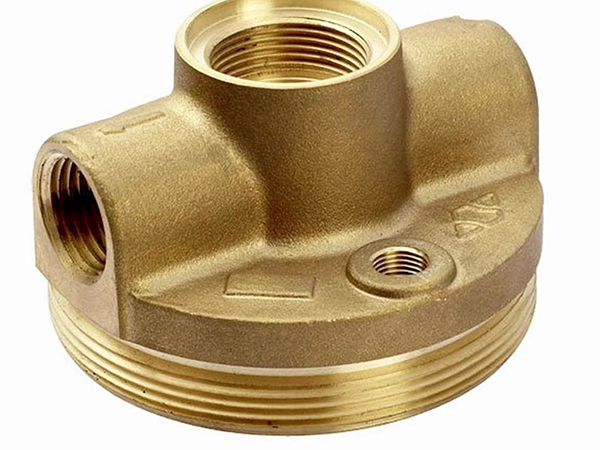
Sourcing cast components means entrusting a supplier with the variables that decide whether a part performs: alloy chemistry, melt control, solidification, and dimensional verification. A low quotation from a foundry that lacks process discipline can surface as shrinkage porosity, inconsistent properties, or out-of-tolerance features that shift cost and risk back to the buyer. For aluminum and copper alloys in particular, the physics of melting and solidification differ enough that a supplier strong in one is not automatically competent in the other. Evaluating a metal casting supplier therefore means examining capability, controls, and continuity before committing tooling and production volume.
Why Supplier Capability Matters More Than Unit Price
Casting quality is determined at the melt and in the mold, long before final inspection. A foundry that does not control hydrogen in aluminum or deoxidation in copper will produce porosity that no amount of downstream machining hides. A supplier that outsources critical operations behaves like a trading company, complicating accountability when a batch fails. The evaluation should treat demonstrated process control as the primary criterion and apply price only among technically qualified suppliers. This discipline protects total cost of ownership even when the headline quote is higher.
Core Capabilities to Evaluate
The first question is whether the supplier's processes match your parts. A foundry optimized for high-pressure aluminum die casting may not be the right source for large sand-cast copper alloy housings, and vice versa. Confirm the actual processes in use, the size and weight envelope each handles, and the alloy families the supplier pours routinely rather than occasionally.
Aluminum Casting Capabilities
For aluminum, the relevant processes are sand, permanent-mold (gravity or low-pressure), and high-pressure die casting. A capable aluminum casting supplier should explain which process fits your volume and property requirement, document per-heat chemistry by spectrometer, demonstrate hydrogen degassing practice, and show grain-refinement and feeding strategy for thick sections. For load-bearing parts, confirm the ability to perform and document heat treatment (commonly a T5 or T6 temper) and to provide tensile data from coupons representing the production lot. Without these controls, even a correct alloy designation can yield inconsistent properties.
Copper Casting Capabilities
Copper alloys melt roughly 300 °C above aluminum and absorb hydrogen readily, producing gas porosity on solidification; they also oxidize easily, and entrained oxide acts as a crack nucleus. A competent copper casting supplier must demonstrate atmosphere or cover-flux control during melting, deoxidation practice matched to the conductivity or property target, and gating and filtration that prevent oxide entrainment. Ask which alloys the foundry actually pours—brasses, tin bronzes, aluminum bronzes, high-conductivity coppers—because each demands different melt practice. A supplier that cannot describe its degassing and deoxidation protocol should not be entrusted with pressure-containing or electrical copper components.
Quality Systems and Certifications
ISO 9001 indicates documented procedures for incoming inspection, process control, and corrective action, and is the baseline for a professional foundry. Sector-specific standards such as IATF 16949 (automotive) or AS9100 (aerospace) apply where the end market requires them. The certificate alone is not sufficient: ask how incoming material is verified, how final leak or dimensional checks are performed, and whether records are retained per lot. A foundry that can show calibrated equipment, a controlled calibration program, and a quarantine area for nonconforming product demonstrates the infrastructure behind the certificate.
Material Traceability and Test Documentation
For engineered components, traceability is not paperwork—it is the buyer's evidence that the delivered part matches the approved sample. Require chemistry certification per heat, heat-treatment records where applicable, and mechanical test results from representative coupons. For critical parts, define the nondestructive examination method—radiographic, ultrasonic, or dye penetrant—and its acceptance criteria in the purchase order. A casting foundry that treats test documentation as a standard deliverable, not an exception, reduces the risk of undetectable nonconformance reaching your line.
Tooling and Engineering Support
Tooling is a long-lived asset that should be protected. Clarify tooling ownership, storage and maintenance responsibility, and what happens to the tool if volumes decline. Beyond tooling, evaluate the supplier's engineering support: can it review your design for castability, recommend process and alloy, and produce a first-article report against all critical characteristics? A foundry that engages on design and tooling as a technical partner shortens development time and lowers lifetime cost compared with one that quotes only from a drawing.
Capacity, Lead Time, and Supply Risk
Capacity alignment affects both prototype responsiveness and volume continuity. Request realistic lead times for first articles and repeat orders, and understand the supplier's raw-material sourcing so a supplier disruption does not propagate into your production. For strategic components, dual-sourcing and safety stock are practical hedges. A foundry that communicates capacity constraints proactively is more valuable than one that quotes aggressively and defaults to silence when strained.
Communication and Technical Responsiveness
Responsiveness during evaluation predicts responsiveness during production. A supplier that asks detailed application questions—fluid, temperature, load, environment, duty cycle—is investing in getting the specification right. One that promises identical performance across very different service conditions without questioning is either inexperienced or indifferent to field failure. For technical buyers, this behavior is a stronger signal than marketing claims.
Red Flags in Supplier Evaluation
Several signals warrant caution: inability to provide measured test data, reluctance to disclose which operations are subcontracted, vague answers on alloy or melt practice, and quotes that omit inspection scope. A foundry that cannot state achievable tolerances for the chosen process, or that resists a factory or third-party audit, is a poor risk for critical components. Conversely, transparency about process limits and a willingness to show records indicate a professional operation.
Frequently Asked Questions
Should I choose a foundry that handles both aluminum and copper?
It is possible, but verify that the supplier pours both families routinely with dedicated melt practice for each. Copper's higher melt temperature and gas absorption behavior require different furnace control than aluminum, so occasional copper pours at an aluminum shop are a risk. Confirm the actual alloys poured, the degassing and deoxidation protocols, and recent reference work in the specific family you need before qualifying.
What documentation should accompany first-article castings?
Expect a dimensional inspection report covering all critical characteristics against defined datums, a material certificate showing chemistry and heat-treatment condition, nondestructive test results where specified, and a summary of any deviations. This package lets you verify that the sampled parts represent what production will deliver, which is the core purpose of first-article approval.
How do I verify a foundry's metallurgical capability?
Request per-heat chemistry records, degassing method and measurement, grain-refinement or deoxidation practice, and heat-treatment documentation, plus representative mechanical test data. A foundry that treats melt control as a documented, measurable process—rather than a recipe followed by memory—demonstrates the metallurgical discipline that determines whether specified properties are achieved.
Is a factory audit necessary before awarding volume?
For significant annual spend or safety-critical parts, a factory or third-party audit is prudent. It should confirm in-house capability, calibrated measuring and test equipment, final inspection procedure, and nonconformance handling. For lower-risk or low-volume work, a strong first-article package and references may suffice, but the audit remains the most reliable way to confirm claimed capability.
Conclusion
Selecting a metal casting supplier is an evaluation of process control, metallurgy, quality systems, traceability, and continuity. The right foundry demonstrates control over the variables that decide casting performance—melt chemistry, gas, solidification, and dimensional verification—selects alloy and process against the real service environment, and documents results with lot-traceable records. Buyers who qualify suppliers on these factors, rather than comparing price per kilogram, secure aluminum and copper components whose properties and dimensions hold up in the field and arrive on a dependable schedule.
References
ASM International. ASM Handbook, Volume 15: Casting. ASM International, Materials Park, OH, 2008.
Campbell, J. Complete Casting Handbook: Metal Casting Processes, Metallurgy, Techniques and Design, 2nd ed. Butterworth-Heinemann, Oxford, 2015.
Davis, J.R. (ed.). Copper and Copper Alloys. ASM Specialty Handbook, ASM International, 2001.
The Aluminum Association. Aluminum Standards and Data: Metric Edition. The Aluminum Association, Arlington, VA, 2018.
International Organization for Standardization. ISO 9001:2015 Quality Management Systems — Requirements. ISO, Geneva, 2015.
 Recommended Products


 Contact Us
—— Hotline:+86 18920038906
—— Email:ruifeng8906@gmail.com
—— Whatsapp:+8618920038906
—— Address:Liusi, Haocun Town, Botou City, Hebei Province, P.R.China