







NewsDetails
Industrial Metal Casting Parts: Materials and Applications
author:ruifengsirens time:2026-09-19 16:35:05 click:136
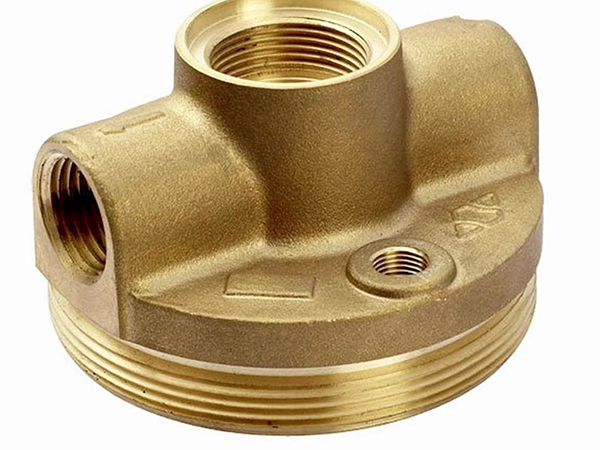
Metal casting remains one of the most efficient routes to a complex, near-net-shape industrial component, consolidating features that would otherwise require extensive welding or machining. The term metal casting parts covers an enormous range—from gray iron machine bases that prioritize damping and machinability, to investment-cast turbine hardware where dimensional fidelity is paramount, to aluminum housings where weight drives the decision. Choosing the right combination of material and process is an engineering judgment that determines not only unit cost but also field reliability, so the selection should begin with service requirements rather than with a familiar catalog part.
The Role of Cast Parts Across Industrial Systems
Cast components appear wherever a part's shape is too complex, too large, or too cost-sensitive for fabrication. Pump volutes, valve bodies, gearbox housings, and structural brackets are routinely cast because the geometry integrates passages, mounting features, and load paths in a single piece. Industrial cast parts reduce assembly count and the joining operations that introduce leak paths and tolerance stacks. The trade-off is that casting introduces its own variability—solidification shrinkage, residual stress, and property gradients—that must be designed around rather than eliminated.
Material Options and Their Engineering Trade-offs
Material selection begins with the property the application cannot compromise. Gray iron offers excellent vibration damping and machinability at low cost, making it the default for machine tool structures and engine blocks, but it is brittle under impact. Ductile iron adds toughness through nodular graphite, suiting components subject to dynamic load. Carbon and alloy cast steel provides the highest strength and toughness for pressure and structural duty, at greater melting and shrinkage control difficulty. Aluminum and copper alloys enter where weight, conductivity, or corrosion resistance dominate, as discussed in their dedicated sourcing contexts.
Matching Material to Loading and Environment
The service environment dictates corrosion and temperature limits. Plain carbon steel castings suffice for benign atmospheres but require protection outdoors; stainless grades resist corrosion at higher cost and with more demanding casting practice. Operating temperature constrains alloy choice: ferritic grades suit elevated temperature in many services, while certain austenitic and heat-resisting alloys are specified where sustained high temperature or thermal cycling occurs. Specifying precision casting components without tying material to the loading and environment invites premature failure.
Process Selection Based on Geometry and Volume
The casting process should follow part geometry and quantity. Sand casting accommodates the largest parts and lowest volumes with minimal tooling, ideal for prototypes and heavy industrial pieces. Investment (lost-wax) casting achieves fine detail and tight tolerances on smaller, intricate parts without parting-line flash. Die casting suits high-volume non-ferrous thin-wall parts. Permanent mold balances properties and volume for aluminum and some copper alloys. Each process sets different limits on minimum wall, draft, and achievable tolerance that the design must respect.
How Volume Changes the Economic Logic
Tooling cost is the pivot. A sand mold reused for a handful of cast metal components spreads almost no tooling cost, whereas a die-cast die amortizes only across large runs. Below a threshold volume, the process with higher piece cost but negligible tooling wins; above it, the reverse holds. Engineers specifying parts should state expected annual quantity honestly, because the "best" process flips across that threshold.
Design Factors That Determine Castability
Castability is designed in, not inspected in. Uniform wall thickness promotes uniform solidification and minimizes shrinkage porosity and hot tearing; where stiffness is needed, ribs and bosses replace thick sections. Generous fillets reduce stress concentrations and improve mold filling. Draft angles permit extraction from sand or dies without damaging the part. Feeding—risers and gates sized to the section—controls shrinkage location. A metal casting parts design that ignores these principles forces the foundry into repair welding and scrap that the buyer ultimately pays for.
Design for Machining and Inspection
Critical faces should be positioned to minimize machining stock while guaranteeing sound material below the cut. Locating features and datum surfaces should be called out so that inspection is repeatable. For investment casting parts, tight-tolerance features are often left as-cast where the process allows, reducing machining; elsewhere, machining stock must be specified explicitly. Early design review with the foundry prevents costly late changes.
Surface Treatment and Finishing Paths
Most industrial cast parts require some finishing. Removal of gates, risers, and parting-line flash is universal; shot blasting cleans and profiles the surface for coating. Machining brings critical dimensions to spec. Corrosion protection—painting, galvanizing, or anodizing depending on alloy—extends service life. Heat treatment may be required to achieve specified mechanical properties, particularly for steel and heat-treatable aluminum. The finishing path should be defined during design, because it influences allowable casting tolerances and cost.
Application Examples by Industry
In fluid handling, cast valve bodies and pump casings exploit shape integration and pressure-bearing section. In transportation, engine and transmission housings exploit aluminum's weight advantage. In energy, turbine and structural castings exploit steel's strength. In general machinery, frames and bases exploit iron's damping. Each example reflects a material–process–geometry match to a dominant requirement—mass, stiffness, pressure, or corrosion—rather than a generic "strong metal" choice.
Specifying and Procuring Cast Parts
A complete specification states material and condition, critical dimensions with tolerances referenced to a standard such as ISO 8062, required inspections (dimensional, NDT, mechanical), and surface treatment. It should identify which features are cast-to-size versus machined, and define acceptance criteria for shrinkage and inclusions. When procuring machined castings, clarify whether the supplier performs machining in-house, since coordinating foundry and machine shop through one accountable source reduces interface risk. First-article approval should precede volume release.
Conclusion
Industrial metal casting parts succeed when material, process, and design are chosen together against the service requirement. Engineers who match alloy to load and environment, select the process by geometry and volume, design for solidification and machinability, and specify inspection and finishing explicitly obtain components that perform reliably at defensible cost. Treating casting as an integrated engineering decision—not a commodity purchase—is what separates a part that merely looks right from one that endures.
Frequently Asked Questions
Which casting process gives the best dimensional accuracy?
Investment casting and die casting achieve the tightest as-cast tolerances, with investment casting favored for intricate small parts and die casting for high-volume non-ferrous thin walls. Sand casting is the least accurate as-cast and typically relies more on machining for critical features. The "best" process depends on part size, volume, and which dimensions are truly critical.
How do I choose between cast iron and cast steel parts?
Choose cast iron where damping, machinability, and low cost dominate and impact loading is modest; gray iron is brittle, ductile iron adds toughness. Choose cast steel where high strength, toughness, or pressure duty is required, accepting higher cost and more demanding casting control. The decision follows the dominant loading and the consequences of failure.
What post-casting operations are typically required?
Most parts require gate and riser removal, shot blasting, and at least some machining of critical faces. Heat treatment may be needed to achieve specified properties, and surface protection such as painting, galvanizing, or anodizing extends service life. The finishing scope should be defined at design so that tolerances and cost are realistic.
How are critical dimensions verified on cast parts?
Critical dimensions are verified by coordinate measuring machines against the drawing, referenced to defined datums. Internal soundness on critical parts may be checked by radiographic or ultrasonic methods, and mechanical properties by test bars or coupons. A clear inspection plan and first-article report are the buyer's evidence that production parts match the approved sample.
References
ASM International. ASM Handbook, Volume 15: Casting. ASM International, Materials Park, OH, 2008.
Beeley, P.R. Foundry Technology, 2nd ed. Butterworth-Heinemann, Oxford, 2001.
Campbell, J. Complete Casting Handbook: Metal Casting Processes, Metallurgy, Techniques and Design, 2nd ed. Butterworth-Heinemann, Oxford, 2015.
International Organization for Standardization. ISO 8062: Castings — Dimensional and Geometrical Tolerances and Machining Allowances. ISO, Geneva, 2019.
Stefanescu, D.M. Science and Engineering of Casting Solidification, 3rd ed. Springer, New York, 2015.
 Recommended Products


 Contact Us
—— Hotline:+86 18920038906
—— Email:ruifeng8906@gmail.com
—— Whatsapp:+8618920038906
—— Address:Liusi, Haocun Town, Botou City, Hebei Province, P.R.China