







NewsDetails
Industrial Equipment Components: A Manufacturing Guide
author:ruifengsirens time:2026-10-07 17:34:58 click:197
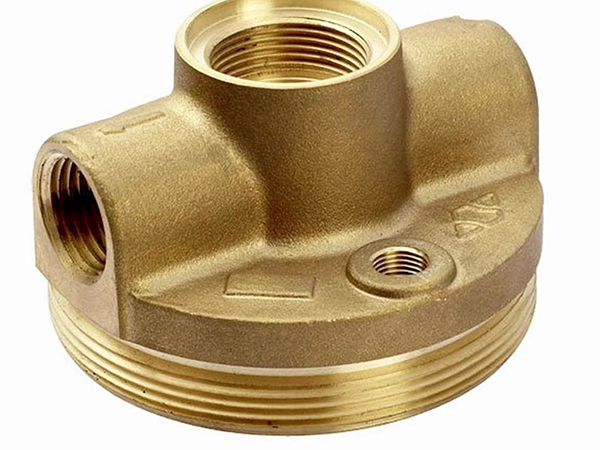
Industrial equipment components are the individual parts that make machines, plants, and infrastructure function—housings, brackets, shafts, flanges, gears, valve bodies, and structural elements among them. Although each component looks simple in isolation, the way it is manufactured determines whether it survives the loads, temperatures, and environments it will face. For engineers and buyers, understanding the manufacturing route behind a component is not academic: it directly affects lead time, cost, dimensional capability, and field reliability. This guide outlines the principal ways industrial equipment components are made, the trade-offs involved, and what a buyer should specify to get a part that performs.
The Range of Industrial Equipment Components
Components differ first in their function, which dictates geometry and material. Structural parts carry load and must resist deformation and fatigue. Rotating parts such as shafts and impellers demand balance, concentricity, and wear resistance. Fluid-containing parts such as valve bodies and pump casings need sound internal structure and pressure integrity. Each function points toward a different manufacturing route. A buyer who understands this mapping avoids requesting a process that cannot deliver the required properties or pays for capability that the application does not need.
Primary Manufacturing Routes
Several processes convert raw material into finished components, and the right choice follows from volume, geometry, material, and tolerance.
Sand and Permanent-Mold Casting
Casting produces a near-net-shape part by pouring molten metal into a mold. Sand casting uses a sand mold, accepts very large parts and low volumes with minimal tooling, and suits complex geometries; it yields coarser surfaces and wider tolerances, so functional faces are usually machined. Permanent-mold and die casting use reusable metal tooling, delivering tighter tolerances and better surface finish at higher volume, but they constrain part size and require tooling investment. Casting is the economical route when geometry is complex and material removal would otherwise be extensive.
CNC Machining from Stock
Machining removes material from bar, plate, or forged stock to reach precise dimensions. It offers the tightest tolerances and the widest material choice, including grades that cannot be cast. The trade-off is material utilization and cycle time: a part machined from solid generates scrap and costs more per piece than a casting of the same shape, especially at volume. Machining is preferred for low-volume precision parts, for materials unsuitable for casting, and where tight tolerances on critical features are mandatory.
Fabrication and Welding
Fabrication assembles components from plate, tube, and section by cutting, forming, and welding. It suits large structures and one-off or low-volume assemblies where casting tooling is unjustified. Weld quality depends on procedure qualification, operator skill, and inspection; distortion and residual stress must be managed through sequencing and post-weld heat treatment where the service conditions require it.
Forging and Forming
Forging shapes metal under compressive force, producing a refined grain flow that improves strength and fatigue resistance versus cast or machined stock. It is the route for highly loaded parts such as shafts, rings, and flanges where directional strength matters. Hot and cold forming also produce consistent parts at volume for suitable geometries.
Additive Manufacturing
Additive processes build parts layer by layer from metal powder or wire. They are valuable for low-volume complex geometries, tooling, and repair, but production rate and cost currently limit broad use for standard industrial components. It is best treated as a complement to conventional routes for specific cases rather than a general substitute.
Material Selection Drivers
Material choice is set by the dominant service requirement. Carbon and alloy steels provide strength and toughness for structural and pressure parts. Stainless grades resist corrosion at higher cost and with more demanding processing. Cast iron offers damping and machinability for bases and frames; ductile iron adds toughness. Aluminum and copper alloys enter where weight, conductivity, or corrosion resistance dominate. The material also determines which processes are viable and what inspection is needed, so material and process should be selected together, not independently.
Design for Manufacturability
A component's cost and quality are largely fixed at the design stage. Uniform wall thickness in castings promotes even solidification and reduces shrinkage defects. Generous fillet radii improve mold filling and lower stress concentration. Draft angles permit part removal from molds and dies. Specifying datums and critical dimensions explicitly lets the shop measure what matters and machine only what must be machined. Designs that ignore these principles force the supplier into repair, scrap, or extra machining that the buyer ultimately pays for. Early design review with the manufacturer prevents expensive late changes.
Quality Control and Inspection
Quality control must match the part's criticality. Dimensional verification uses calibrated measuring equipment against defined datums; critical characteristics may require statistical monitoring. Internal soundness for cast or welded load-bearing parts is checked by radiographic, ultrasonic, or dye-penetrant methods where the application demands it. Material confirmation uses spectrometer analysis and mechanical test coupons. A capable supplier documents these controls and retains records traceable to the production lot. Buyers should state acceptance criteria in the purchase order rather than assume them.
Standards and Tolerances
Dimensional tolerances follow recognized standards such as ISO 8062 for castings or general ISO machining tolerances. The achievable accuracy depends on process and part size; specifying tighter tolerances than the process comfortably holds raises cost without adding function. Buyers should specify tolerances only where they affect fit or performance, and accept standard commercial tolerances elsewhere.
Surface Treatment and Finishing
Most components require finishing. Cleaning and blasting prepare surfaces for coating. Corrosion protection—painting, galvanizing, anodizing, or plating—extends service life and should be selected for the environment. Heat treatment may be required to achieve specified mechanical properties, particularly for steel and heat-treatable aluminum. Finishing scope should be defined during design because it influences allowable casting tolerances and total cost.
How Manufacturing Choice Affects Total Cost
Unit price is only one term in total cost. Tooling amortizes across volume, so a process with high tooling cost wins only above a volume threshold. Material utilization, scrap rate, and secondary machining content shape the real per-part cost. Lead time and minimum order quantity affect inventory and working capital. A part specified for the wrong process—machined from solid when casting would do, or cast when machining is required for tolerance—carries hidden cost that appears later as scrap, rework, or expediting. Evaluating manufacturing route against volume and tolerance is the disciplined way to control cost.
What Buyers Should Specify in an RFQ
A clear request for quotation reduces ambiguity and mismatched bids. Include the drawing with all dimensions, tolerances, and datums; the material grade and any condition or heat treatment; the required inspections and acceptance criteria; surface treatment and corrosion-protection requirements; expected annual volume and initial quantity; first-article sample needs; and any applicable standards. Ambiguity in material, tolerance, or inspection is the most common cause of quote variance and should be removed before release. Supplying this information lets suppliers quote on the same basis and shortens the qualification cycle.
Frequently Asked Questions
When is casting preferable to machining from solid stock?
Casting is generally preferable when the geometry is complex, the volume is sufficient to justify tooling, and material removal from solid would be extensive. It reduces machining content and cost for shaped parts such as housings and brackets. Machining from stock remains better for low volumes, for materials that cannot be cast, and where the tightest tolerances on critical features are required.
Which process gives the tightest dimensional accuracy?
CNC machining from stock gives the tightest achievable tolerances and the widest material choice. Among forming processes, die and permanent-mold casting hold tighter as-cast tolerances than sand casting, while sand casting relies more on machining for critical features. The process should be selected against the part's true tolerance needs rather than a generic preference for tightness.
What inspection should I require for a load-bearing cast component?
For load-bearing or pressure-containing cast parts, request material certification by spectrometer, mechanical test bars representing the production condition, and nondestructive examination appropriate to the risk—radiographic or ultrasonic for internal soundness, dye penetrant for surface-breaking flaws. Define acceptance criteria in the purchase order and require lot-traceable records so that nonconforming material can be identified and contained.
How does volume affect the choice of manufacturing route?
Volume sets the economic logic through tooling amortization. Below a threshold, processes with low or no tooling—sand casting, fabrication, machining—win despite higher per-piece cost. Above it, tooled processes—die casting, permanent mold, high-rate forging—recover tooling across the run and lower per-piece cost. Stating realistic annual volume in the RFQ lets suppliers recommend the right process.
Conclusion
Industrial equipment components are defined by how they are made as much as by their drawing. The manufacturing route—casting, machining, fabrication, forging, or additive—should follow the part's function, volume, material, and tolerance, selected together rather than independently. Controlling material, design for manufacturability, inspection, and finishing determines whether a component performs in service and at what total cost. Buyers who specify clearly and evaluate route against volume and requirement secure parts that are fit for purpose without paying for unneeded capability.
References
Kalpakjian, S. and Schmid, S. Manufacturing Engineering and Technology, 7th ed. Pearson, Boston, 2014.
Groover, M.P. Fundamentals of Modern Manufacturing: Materials, Processes, and Systems, 6th ed. Wiley, Hoboken, 2016.
ASM International. ASM Handbook, Volume 15: Casting. ASM International, Materials Park, OH, 2008.
International Organization for Standardization. ISO 8062: Castings — Dimensional and Geometrical Tolerances and Machining Allowances. ISO, Geneva, 2019.
International Organization for Standardization. ISO 9001:2015 Quality Management Systems — Requirements. ISO, Geneva, 2015.
 Recommended Products


 Contact Us
—— Hotline:+86 18920038906
—— Email:ruifeng8906@gmail.com
—— Whatsapp:+8618920038906
—— Address:Liusi, Haocun Town, Botou City, Hebei Province, P.R.China