







NewsDetails
Copper Casting Manufacturer: Process, Quality, Applications
author:ruifengsirens time:2026-09-16 21:37:16 click:164
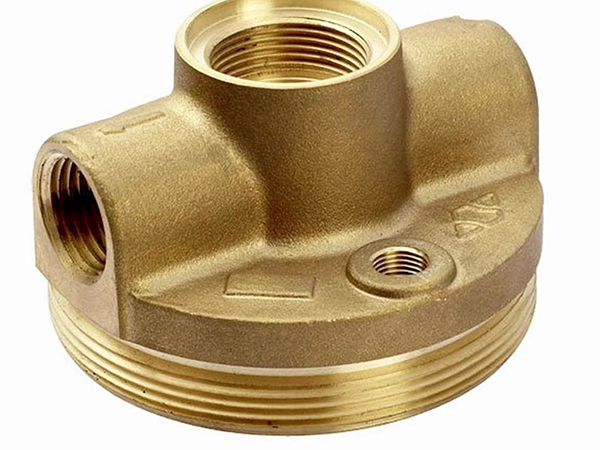
Copper-based alloys occupy a specialized but critical niche in industrial components where electrical conductivity, thermal performance, or corrosion resistance is decisive. Casting copper is not a marginal variant of aluminum casting; the higher melt temperature, greater density, and strong affinity for gas pickup demand different furnace practice, molding media, and gating design. A copper casting manufacturer must demonstrate control over these variables, because the failure modes in copper alloys—gas porosity, oxide inclusions, and segregation—directly undermine the properties the application was specified to deliver.
Why Copper Alloys Demand Specialized Casting Expertise
Copper melts near 1085 °C, roughly 300 °C above aluminum, which accelerates refractory degradation and increases the risk of melt contamination from furnace linings and tooling. The metal also dissolves hydrogen readily at elevated temperature and rejects it on solidification, producing microporosity that degrades both pressure tightness and mechanical properties. These physics mean that a foundry's aluminum experience does not automatically transfer to copper alloy casting; dedicated furnace practice, degassing, and mold preparation are prerequisites for consistent results.
Copper Casting Processes Compared
Several processes serve copper alloys, each matched to part size, conductivity requirement, and volume. Sand casting remains common for bronze and brass components of moderate to large size, using either green sand or chemically bonded molds; it accommodates low volumes and complex geometries but yields coarser surfaces. Permanent-mold and die casting suit higher-volume, lower-melting copper alloys such as certain brasses, where repeatability and surface finish justify tooling cost. Continuous casting produces bars, tubes, and profiles with uniform, defect-controlled structure for subsequent machining, and is the route of choice when consistent metallurgical quality matters more than near-net shape.
Process Selection and Conductivity Trade-offs
Electrical applications often require high-conductivity coppers where even small alloying additions reduce performance. For such parts, melting and pouring must minimize oxygen and impurity pickup, and processes that preserve purity—often with controlled atmospheres or deoxidation practice—are specified. A copper foundry serving electrical markets should explain how it protects conductivity, not merely report an alloy designation.
Controlling Porosity and Gas Absorption
The central quality battle in copper casting is gas. Hydrogen dissolved under cover of oxide or from moist charge materials precipitates during solidification as Round, dispersed porosity. Effective control combines dry, clean charge materials, deoxidation with phosphorus or lithium where appropriate, and degassing treatments that reduce dissolved gas before pour. Gating and risering must then feed shrinkage without entraining oxide. A copper casting manufacturer that cannot describe its degassing and deoxidation practice should not be entrusted with pressure-containing or electrical components.
Oxide Inclusion Management
Copper oxides form readily and, once entrained, persist as inclusions that nucleate cracks and weaken the matrix. Skimming discipline, tundish pouring, and filter use reduce inclusion content. For critical parts, filtration through ceramic foam filters is a recognized measure. Buyers should ask whether the supplier uses melt filtration for the alloy and application in question.
Alloy Families and Property Trade-offs
Copper casting alloys divide broadly into brasses (copper–zinc), bronzes (copper with tin, aluminum, or nickel), and high-conductivity coppers. Brasses offer good castability and moderate strength at lower cost, making them common for fittings and decorative-functional parts. Tin and aluminum bronzes deliver superior corrosion and wear resistance, favored in marine and bearing applications. The trade-off is that higher-performance alloys are less fluid and more sensitive to pouring practice. A credible bronze casting supplier will steer the buyer toward the alloy that meets the service environment rather than the one that is easiest to pour.
Corrosion and Wear Considerations
Alloy choice should follow the service medium. Seawater and many process fluids attack certain brasses through dezincification; inhibited brasses or nickel-aluminum bronzes resist far better. For sliding contact, leaded bronzes provide embedded lubricant behavior but reduce strength and are unsuitable where regulatory lead limits apply. Matching the copper alloy casting to the medium is an engineering decision the manufacturer should support with application reasoning, not just a catalog cross-reference.
Quality Verification for Critical Components
Verification ranges from visual and dimensional checks to nondestructive and destructive testing. Pressure-tight components warrant hydrostatic or pneumatic testing; internal soundness is assessed by radiographic or ultrasonic methods where the part is critical. Chemical confirmation by spectrometer and mechanical testing of separately cast test bars validate that the alloy and condition meet specification. An established copper casting manufacturer maintains calibrated spectrometers and documented test routines, and retains records traceable to the casting heat.
Typical Industrial Applications
Cast copper alloys appear wherever conductivity, corrosion resistance, or bearing behavior is decisive. Electrical and thermal components exploit copper's conductivity; marine hardware and pump impellers exploit bronze's seawater resistance; bearing bushes and worm gears exploit the embedded-lubricant behavior of leaded bronzes. Brass casting serves plumbing, valve, and fitting markets where moderate strength and excellent machinability dominate. The breadth of service conditions is precisely why alloy and process selection must be application-led.
Selecting a Copper Casting Partner
When qualifying a supplier, probe furnace type and atmosphere control, degassing and filtration practice, alloy range actually poured (not just listed), and inspection capability. Request sample parts with full documentation—chemistry, heat number, test results—and evaluate responsiveness to technical questions about your service environment. A copper casting manufacturer that engages with the application's failure modes is more likely to deliver sound, fit-for-purpose components than one that quotes solely from a drawing.
Conclusion
Copper casting rewards process discipline and punishes assumption. The right copper casting manufacturer controls melt chemistry, gas, and inclusions through documented practice, selects alloy and process against the real service environment, and verifies results with calibrated testing. Buyers who evaluate these capabilities—rather than comparing price per kilogram—secure components whose conductivity, corrosion resistance, and mechanical integrity hold up in the field.
Frequently Asked Questions
Why is copper harder to cast than aluminum?
Copper's much higher melting point accelerates refractory attack and increases contamination risk, while its strong solubility for hydrogen leads to gas porosity on solidification. These factors demand dedicated degassing, deoxidation, and gating practice that differ from aluminum casting. A foundry experienced only in aluminum cannot assume equivalent results in copper alloys without specific process controls.
Which copper alloy resists seawater corrosion best?
Nickel-aluminum bronzes and certain inhibited brasses perform well in seawater, whereas common brasses are vulnerable to dezincification in that environment. The correct choice depends on flow velocity, biofouling, and whether galvanic coupling exists. A qualified copper alloy casting supplier should recommend based on the specific medium rather than defaulting to a generic bronze.
How is porosity detected in copper castings?
Internal soundness is commonly assessed by radiographic examination for critical parts, supplemented by ultrasonic methods where geometry permits. Pressure-tight components may also undergo hydrostatic or pneumatic leak testing. Chemistry and mechanical properties are confirmed by spectrometer analysis and test-bar evaluation. The applicable method should follow the part's criticality and service conditions.
What minimum wall thickness is achievable in copper casting?
Minimum wall thickness depends on alloy fluidity, process, and section size; sand-cast copper alloys generally require thicker walls than aluminum because of lower fluidity and higher density. Permanent-mold and die-cast brasses can achieve thinner sections than sand-cast bronzes. The manufacturer should specify achievable minimums for the chosen alloy and process rather than quoting a generic number.
References
ASM International. ASM Handbook, Volume 2: Properties and Selection: Nonferrous Alloys and Special-Purpose Materials. ASM International, Materials Park, OH, 1990.
Davis, J.R. (ed.). Copper and Copper Alloys. ASM Specialty Handbook, ASM International, 2001.
Campbell, J. Complete Casting Handbook: Metal Casting Processes, Metallurgy, Techniques and Design, 2nd ed. Butterworth-Heinemann, Oxford, 2015.
International Organization for Standardization. ISO 1338: Cast Copper Alloys — Ingots and Castings. ISO, Geneva, 1998.
Stefanescu, D.M. Science and Engineering of Casting Solidification, 3rd ed. Springer, New York, 2015.
 Recommended Products


 Contact Us
—— Hotline:+86 18920038906
—— Email:ruifeng8906@gmail.com
—— Whatsapp:+8618920038906
—— Address:Liusi, Haocun Town, Botou City, Hebei Province, P.R.China