







NewsDetails
Aluminum Casting Manufacturer Guide for Global Buyers
author:ruifengsirens time:2026-09-14 17:56:12 click:122
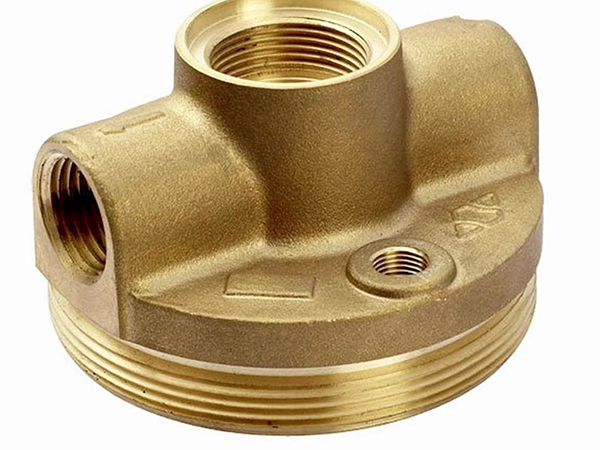
Aluminum castings are a cornerstone of lightweight structural and functional components across automotive, electrical, and industrial equipment markets. For global buyers, the challenge is not finding a aluminum casting manufacturer willing to quote, but identifying one whose process discipline matches the functional requirements of the part. A casting that looks correct on arrival can still fail in service from internal shrinkage, inconsistent heat treatment, or out-of-tolerance features that shift machining burden back to the buyer. Effective sourcing evaluates the manufacturer's control over cause, not just appearance.
The Global Sourcing Landscape for Aluminum Castings
Aluminum foundries differ enormously in scale and specialization. Some operate high-pressure die casting lines optimized for millions of thin-wall automotive parts; others focus on sand casting of low-volume, large-section industrial housings. A buyer's first task is to match the supplier's core process to the part's volume, geometry, and tolerance needs. Requesting a high-pressure die-cast quote for a one-off 200 kg bracket, or a sand-cast quote for a million-piece consumer housing, signals a mismatch that will surface as cost or capability problems later.
Casting Process and Its Manufacturing Implications
The dominant processes each carry trade-offs a buyer must understand. High-pressure die casting delivers excellent dimensional repeatability and surface finish at high volume but constrains part size and internal soundness, and entrapped gas can limit post-casting heat treatment. Sand casting accepts very large parts and low volumes with minimal tooling cost, at the expense of tighter tolerances and rougher surfaces that require more machining. Permanent-mold (gravity) casting sits between, offering better mechanical properties than sand casting for medium volumes. A knowledgeable aluminum alloy casting OEM will recommend the process based on your duty cycle and quantities rather than defaulting to the process it happens to own.
Why Process Choice Drives Downstream Cost
The casting process determines how much material must be machined away and how much inspection is required. A process well matched to the geometry minimizes machining stock and reduces the risk of exposing shrinkage porosity during finishing. Buyers should ask the aluminum die casting supplier to justify the recommended process against expected annual volume, because the wrong process quietly inflates per-part cost through scrap and rework.
Alloy Selection and Metallurgical Control
Aluminum casting alloys are grouped largely by major alloying elements—silicon, magnesium, copper—each trading strength against castability and corrosion resistance. The widely used Al–Si–Mg family (for example, the 3xx series) responds to heat treatment for improved strength, but only if the foundry controls melt chemistry, degassing, and grain refinement. A competent casting foundry should document chemistry per heat, demonstrate hydrogen degassing practice, and explain its feeding and cooling strategy for thick sections. Without these controls, even a correct alloy designation can yield inconsistent mechanical properties.
Heat Treatment and Property Verification
For structurally loaded parts, heat treatment (commonly a T5 or T6 temper) is where specified yield strength is actually achieved. Buyers should confirm that the manufacturer can perform and document the thermal cycle, and that tensile verification uses representative coupons or test bars from the same casting condition. An aluminum casting manufacturer unable to provide property data per heat is a poor choice for load-bearing applications.
Dimensional Tolerances and Machining Allowances
Casting tolerances follow recognized standards such as ISO 8062, but achievable accuracy depends on process and part design. Die casting holds the tightest as-cast tolerances; sand casting requires generous machining allowances on functional faces. Clarify which dimensions are cast-to-size versus machined, and confirm the supplier's capability for the critical ones. A sand casting manufacturer that promises tight as-cast tolerances on a large thin-wall part is either overpromising or planning heavy machining that it has not costed.
Quality Assurance and Inspection Infrastructure
Quality infrastructure separates a production-capable foundry from a job shop. Relevant capabilities include coordinate measuring machines for dimensional verification, X-ray or computed tomography for internal defect assessment on critical parts, dye penetrant for surface-breaking flaws, and spectrographic analysis at melt. An aluminum casting manufacturer serving automotive or aerospace markets should operate under IATF 16949 or equivalent discipline; for general industry, a robust ISO 9001 system with documented control plans is the baseline. First-article inspection reports and statistical process control on critical characteristics indicate maturity.
What First-Article Documentation Should Contain
A meaningful first-article package includes dimensional measurements against every critical characteristic, material certificate, heat-treatment record, and nondestructive examination results where specified. Buyers should treat missing or generic first-article reports as a signal that production consistency is not being verified, not merely as a paperwork gap.
Logistics, Lead Time, and Supply-Chain Risk
Cross-border sourcing introduces transit time, customs, and currency variables that affect replenishment. Evaluate the manufacturer's track record on on-time delivery, its packaging for corrosion protection during long sea freight, and its responsiveness to engineering changes. Dual-sourcing strategic parts and maintaining safety stock for long-lead items are practical mitigations. A precision aluminum castings supplier that communicates proactively about capacity constraints is more valuable than one that quotes aggressively but defaults silently.
Building a Long-Term Supplier Partnership
The most durable sourcing relationships treat the foundry as a technical partner. Sharing intent—annual volume trajectory, upcoming design changes, field failure feedback—lets the manufacturer plan capacity and improve yield. In return, buyers gain process improvements, earlier warning of material cost shifts, and priority during capacity crunches. This collaborative posture outperforms pure transactional quoting over the product lifecycle.
Conclusion
Selecting an aluminum casting manufacturer is a capabilities assessment, not a price comparison. Buyers who evaluate process fit, metallurgical control, dimensional capability, inspection maturity, and supply-chain resilience make sourcing decisions that survive contact with production. The right aluminum alloy casting OEM reduces total cost through yield, consistency, and engineering support rather than through the lowest headline quotation.
Frequently Asked Questions
Which aluminum casting process suits high-volume production?
High-pressure die casting is generally the most economical for very large volumes of small-to-medium parts with thin walls and tight tolerances, because tooling amortizes across the run and cycle times are short. For medium volumes where mechanical properties matter more than absolute tolerance, permanent-mold casting is often preferable. The decision should weigh annual quantity, part mass, and required properties rather than defaulting to a single process.
How are casting defects controlled in production?
Defect control begins at melt—chemistry verification, hydrogen degassing, and grain refinement—and continues through gating, feeding, and controlled solidification to avoid shrinkage. Production verification uses dimensional measurement, nondestructive examination such as X-ray for critical parts, and mechanical testing of representative coupons. A mature casting foundry documents these controls in process plans and retains records per production lot.
What documentation should accompany first-article samples?
Expect a dimensional inspection report covering all critical characteristics, a material certificate showing chemistry and heat-treatment condition, nondestructive test results where specified, and a summary of any deviations. This documentation lets the buyer verify that the sampled parts represent what production will deliver, which is the core purpose of first-article approval.
How do I evaluate a foundry's metallurgical capability?
Ask for per-heat chemistry records, degassing method and measurement, grain-refinement practice, and heat-treatment documentation. Request representative mechanical test data. A foundry that treats melt control as a documented, measurable process—rather than a recipe followed by memory—demonstrates the metallurgical discipline that determines whether specified properties are actually achieved.
References
ASM International. ASM Handbook, Volume 15: Casting. ASM International, Materials Park, OH, 2008.
Campbell, J. Complete Casting Handbook: Metal Casting Processes, Metallurgy, Techniques and Design, 2nd ed. Butterworth-Heinemann, Oxford, 2015.
The Aluminum Association. Aluminum Standards and Data: Metric Edition. The Aluminum Association, Arlington, VA, 2018.
International Organization for Standardization. ISO 8062: Castings — Dimensional and Geometrical Tolerances and Machining Allowances. ISO, Geneva, 2019.
Stefanescu, D.M. Science and Engineering of Casting Solidification, 3rd ed. Springer, New York, 2015.
 Recommended Products


 Contact Us
—— Hotline:+86 18920038906
—— Email:ruifeng8906@gmail.com
—— Whatsapp:+8618920038906
—— Address:Liusi, Haocun Town, Botou City, Hebei Province, P.R.China